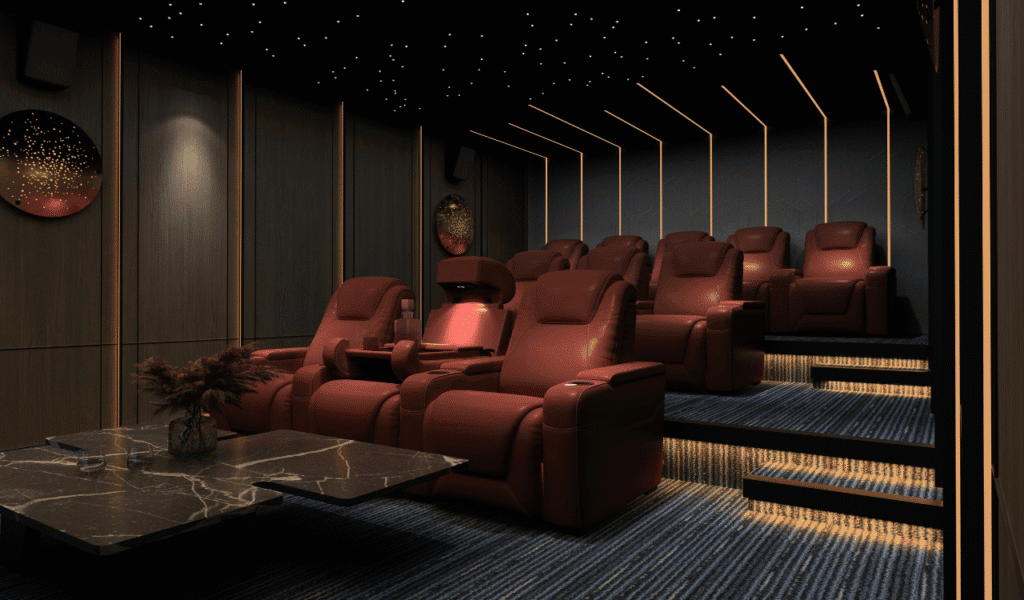
In an era where notifications and the endless scroll of social media are always taking our attention, finding a movie that truly grabs our attention is a special and worthwhile experience. A phenomenon known as the “flow state” occurs when a story is so captivating that viewers lose awareness of time and their surroundings. Both movie critics and psychologists often bring it up.
This February, we are exploring those rare cinematic gems that act as a digital detox, engrossing you in their worlds to the point that your smartphone becomes less important.
“Phone-proof” films are defined by their pacing, visual intricacy, and high-stakes emotional payoffs, according to industry experts. According to renowned film historians, when a story escapes the traditional “second-act slump,” the brain is still engaged in problem-solving and empathy, which prevents the typical reach for a second screen. These thirteen selections have been selected not only for their critical acclaim but also for their demonstrated ability to hold audiences’ attention both physically and cognitively.
1. Parasite (2019)
Bong Joon-ho’s South Korean masterpiece is frequently cited by film critics as the pinnacle of “genre-bending” storytelling that grips viewers. Experts claim that the film’s transition from dark humor to a gripping thriller is so seamless and unexpected that you risk missing a significant tone shift if you take your eyes off it for even a brief second. According to film experts, the intricate production design of the Park family’s home is a character in and of itself, rewarding viewers who pay attention to the spatial arrangement and visual hierarchy.
Because the societal critique is so intricately woven into the narrative, every interaction has two meanings outside of the structure. Film historians claim that using “smell” as a narrative device gives the viewer a visceral, bodily connection. Experts say the first half meticulously builds a house of cards that the audience is terrified to watch fall, which is why the final act is so explosive. It is a fantastic, frightening experience that demands your whole focus.
2. Inception (2010)
Known for his “intellectual immersion,” Christopher Nolan’s Inception is possibly his most challenging film. The “dream within a dream” structure of the film necessitates the audience to concurrently follow several timeframes and physical laws, according to film theorists. According to experts, the internal logic of the movie is so intricate that even a glance at your phone can leave you completely perplexed as to which “level” of reality the actors are presently inhabiting. The film is intended for the keen puzzle-solver.
For the iconic revolving hallway scene, Nolan used realistic effects to heighten the immersion, which, according to stunt coordinators, maintains the audience visually anchored despite the strange concept. According to experts, the Hans Zimmer music functions like a ticking clock, unconsciously synchronizing the audience’s heartbeat with the hectic tempo of the movie. Your capacity to argue the last frame is solely dependent on how attentively you observed the hints that were concealed throughout the course of the preceding two hours, as the conclusion is left up for interpretation.
3. Mad Max: Fury Road (2015)

For a full-on sensory experience, George Miller’s high-octane adventure is among the best films. Professional editors and stunt coordinators reveal that the film mostly tells its story through visual action rather than dialogue. Experts claim that the relentless tempo and “practical effects” create a visceral experience that stops viewers from consciously scanning for warning signs. The explosiveness and constant movement of the choreography demand a level of focus that renders the actual world dull.
Cinematography specialists emphasize that the film’s “center-framing” technique minimizes eye strain by keeping the audience’s gaze on the center of the screen despite the fast-paced action. Experts claim that the striking color palette was purposefully selected to subvert the “bleak and gray” post-apocalyptic cliché, making every frame seem like a dynamic painting. Throughout the two-hour chase, which is a masterwork of dramatic storytelling, the outside world is virtually erased until the engine finally stops.
4. Whiplash (2014)
Whiplash proves that a gripping psychological conflict, not explosives, is all that is needed for a high-octane movie. Music historians and film reviewers attribute the suspense of the film primarily to J.K. Simmons’s horrific performance and the “staccato” editing. Experts say the film’s climax “locks” the spectator into the picture because it is so emotionally and musically exhausting. The acoustic design is purposefully made to evoke the audience’s physical experience, according to experts.
The musical sections are edited in accordance with action movie conventions, with quick cuts that resemble the frantic rhythm of the jazz drummers. Experts claim that because of how unpredictable the student-teacher relationship is, the spectator is constantly on high alert, much like the main character. According to psychologists, the film plays on everyone’s fear of failing and obsessive demand for perfection, making the stakes appear extremely personal and inevitable.
5. Arrival (2016)
The science fiction drama by Denis Villeneuve celebrates linguistics and non-linear time. Arrival is a “slow-burn” immersion that relies on ambiance and information that is unveiled gradually, according to experts. Film experts assert that the film’s resolution depends on the audience’s attention being drawn to little, seemingly inconsequential details in the first act. The film respects the audience’s intelligence, and if you look at your phone during the quiet scenes, you will miss the subtle emotional overtones in the ending.
Visual effects experts claim that understanding the film’s central mystery requires a high degree of visual focus due to the “Heptapod” language’s intricate design. Experts claim that the usage of vocal loops in Jóhann Jóhannsson’s score creates a captivating impact and immerses the viewer more in the protagonist’s thoughts. As the movie finally transitions from a political thriller to a profound reflection on life and choice, the audience is left in a stunned silence that makes a ringing phone seem like a sacrilege.
6. Uncut Gems (2019)
The most frenzied work by the Safdie Brothers, who are masters of “anxiety cinema,” is Uncut Gems. According to professional sound editors, the film’s overlapping dialogue and throbbing electronic music give the impression that it is always moving. According to experts, the movie is intentionally “uncomfortable” in a way that makes it hard to ignore. Adam Sandler’s character is surrounded by high-stakes games and nonstop commotion, which creates a psychological pressure cooker that keeps viewers’ attention on the screen.
Critics frequently comment on how beautifully the video depicts the bustling Diamond District, saying that you can practically feel the stress and humidity through the image. According to experts, the continuous background noise is intentionally created to keep the audience from ever feeling completely relaxed. The audience is compelled to wait in hyper-fixation for the inevitable moment when the protagonist’s luck finally runs out since they are constantly one step away from catastrophe.
7. The Prestige (2006)
It is evident that it is a magic trick in another of Nolan’s works, The Prestige. Film critics have described the tale as a three-act illusion: The Prestige, The Performance, and The Setup. According to experts, the “clues” to the movie’s massive twist are hidden in plain sight from the very first frame. Checking your phone while watching this movie will destroy the ending surprise, which is equivalent to turning your head away during a sleight-of-hand trick.
Costume designers and set decorators reveal that the plot’s technical riddles are hidden behind every facet of the Victorian era. Experts claim that because of the film’s realistic depiction of rivalry, viewers are emotionally drawn into the “how” of each illusion. Because it is an issue that needs to be solved, the film encourages a level of active participation that most modern blockbusters do not, making it one of the most rewarding and focused viewing experiences in contemporary cinema.
8. Prisoners (2013)
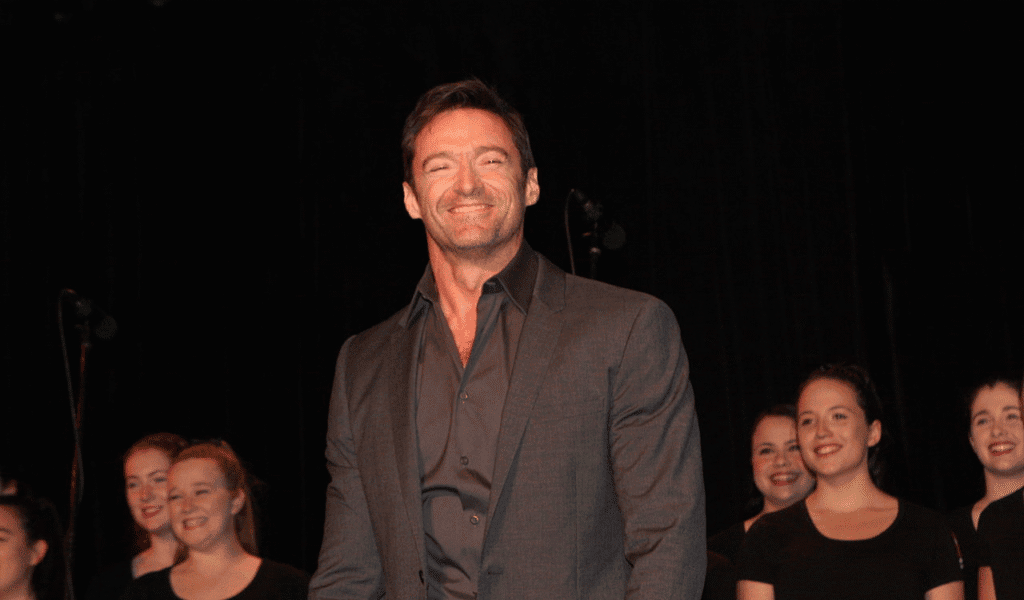
This gripping thriller is a masterful illustration of tension and moral uncertainty. Experts say the film’s claustrophobic, damp, and dark cinematography is meant to pull the air out of the room. Experts claim that the “whodunnit” aspect of the plot is so well-woven that the audience actively participates in the protagonists’ investigation. Without total focus, it is hard to navigate the story’s dark psychological corners, where every suggestion counts, making it a difficult and demanding watch.
The portrayal of a desperate parent by Hugh Jackman is so raw that it evokes a profound unease that endures. Experts claim that the film’s purposefully slow pacing is intended to simulate the agonizing wait for news, which ironically heightens the shock of the sudden violent outbursts. According to crime specialists, the movie’s depiction of police procedures and vigilante justice is extremely realistic, giving it a genuine feel that keeps viewers grounded in the terrible realism of the narrative.
9. Interstellar (2014)
Even while the deep space scenery in Interstellar is breathtaking, the film’s immersive quality lies in its handling of time and human emotion. Science communicators and movie buffs find that the “time dilation” sequences on many planets provide a unique type of narrative suspense. Experts claim that the film’s vast breadth, both in terms of its cosmic grandeur and orchestral score, is meant to overwhelm the senses. The movie’s depiction of your real life makes the digital world on your phone seem unimportant.
According to astrophysicists who consulted on the film, notably Kip Thorne, the depiction of the black hole, Gargantua, was based on actual scientific formulas. This adds a remarkable level of realism to the scenario. Experts claim that the film’s emotional center, a father’s promise to his daughter, is what prevents the complex science from getting disinterested. This cinematic experience, in which the sound of the organ music is as powerful as the silence of the surroundings, requires a large screen and a dimly lit environment.
10. Shutter Island (2010)
Martin Scorsese’s psychological thriller is riddled with red herrings and a flimsy plot. Experts say that although the film is intended to be seen more than once, the first viewing only works if the viewer is completely absorbed in the mystery. The “gothic” atmosphere and the persistent questions about the protagonist’s sanity, according to film historians, make for a high-alert viewing experience. It is not just a story you are watching; you are trying to figure out a problem before the character does.
Confusion is intended via the asylum’s production design, which features passages that seem to lead nowhere and shadows that hide crucial information. Experts claim that the use of color and lighting in the movie foreshadows its eventual twist long before it is disclosed. The spectator must assume the position of an unbiased observer in order to uncover the island’s dark truths because of the protagonist’s flawed sense of reality. As a result, the investigative experience becomes truly captivating.
11. No Country for Old Men (2007)
The Coen Brothers’ neo-Western is a masterwork of tension and silence. The lack of a musical score, as revealed by film editors, is a deliberate choice to emphasize every sound, even the clink of a coin, a killer’s breathing, and a footstep. A ringing phone would instantly interrupt an immersive experience, experts say, because without music, the audience’s ears become as sensitive as their eyes. This film teaches you how to see it.
Anton Chigurh is often described by critics as a “force of nature,” and his on-screen persona arouses a sensation of terror that is uncommon in motion pictures. Experts claim that by emphasizing Texas’ vast, barren landscapes, the film’s cinematography gives the protagonists’ sense of isolation a genuine quality. Its minimalism, which forces spectators to pay attention to even the smallest movements and sounds, turns a simple game of cat-and-mouse into a profound and terrifying cinematic experience.
12. Sicario (2015)
Sicario exemplifies “dread.” Experts claim that the use of long, wide shots that make viewers alert for potential threats is what builds the suspense in the movie. Experts consider the famous border-crossing scene, with its rumbling, low score, and meticulous editing, to be among the most tense ten minutes in modern cinema. Since the picture demands a great degree of situational awareness from the viewer, it is impossible to turn away without breaking the spell of danger.
Military advisors often commend the movie for its tactical realism and depiction of the “gray zones” of international law enforcement. Experts claim that the use of low-frequency vibrations in the sound design physically unnerves the listener. We are forced to watch closely and repeatedly as we try to decipher the individuals’ true objectives, since the viewer is just as lost as the protagonist is kept in the dark about the operation’s ultimate goal.
13. Memento (2000)
The list concludes with the film that made Christopher Nolan famous. Film experts claim that because the film is presented backwards, viewers are essentially suffering from the same short-term memory loss as the protagonist. Experts claim that every scene begins with the question, “How did I get here?” and that the only way to know the answer is to view the scene that came before it. The ultimate attention test is checking your phone, which causes you to lose the chronological thread entirely.
The use of black-and-white sequences to denote a distinct timeline adds another level of intricacy that keeps the mind engaged. Experts claim that the film’s appeal hinges on viewers’ natural need to bring order to chaos, which makes it feel like assembling a jigsaw puzzle while you watch it. As this amazing, perplexing, and unique movie proves, a really great tale is worth more than any distraction your phone could offer.