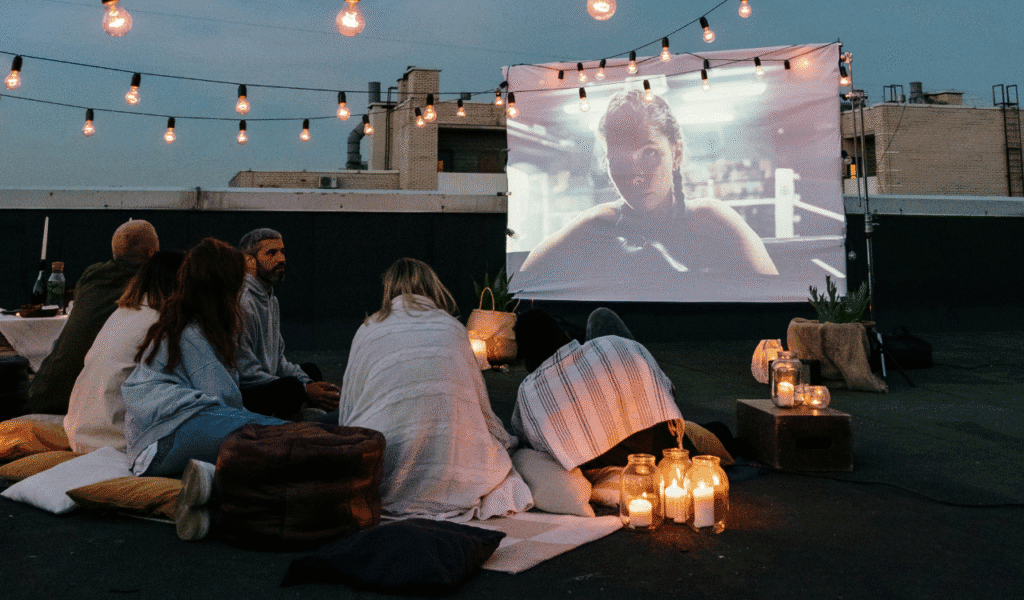
From the quiet ambiance to the rich rumbling of the bass, entering a high-end movie theater is an experience that appeals to all senses. However, you may achieve the same effect in your own house without a dedicated basement or a large construction expense. According to experts, “environmental control,” or the capacity to adjust light, sound, and comfort in your current living area, is the secret to a successful private theater. It involves drawing a line both physically and mentally between your regular sitting spot and a special viewing haven.
The screen size is sometimes the only consideration for many homes, according to interior designers and AV experts, who overlook the small touches that truly contribute to “immersion.” Professional theater installers claim that the objective is to remove all outside distractions so that the narrative on the screen takes center stage. A typical movie night may be transformed into a high-end event with a few thoughtful layout, lighting, and audio changes. This tutorial looks at eight doable, professionally supported ways to turn your living room into the best private screening space without sacrificing its daily use.
1. Master Light Control with Blackout Solutions
Ambient light, which destroys the deep blacks required for a “movie” look and washes out colors, is the worst enemy of a cinematic image. Traditional blinds, according to experts, frequently let light in around the borders, which may be very distracting when watching during the day. Installing premium blackout curtains or cellular shades with side tracks is the first step towards creating a theater-like atmosphere, according to interior experts.
By simulating the windowless atmosphere of a commercial theater, these systems guarantee that the space can be completely darkened at any time of day. Additionally, lighting professionals advise being mindful of the hue of your walls. Professional flippers advise choosing darker, non-reflective colors like charcoal or blue for the wall behind the screen, even though you might not want to paint the entire living room matte black.
According to experts, dark surfaces greatly increase apparent contrast by absorbing surplus light instead of reflecting it onto the screen. If painting is not an option, you may still create a similar light-dampening effect for your movie sessions by simply adding a colorful tapestry or a large piece of dark textile.
2. Elevate the Audio Experience with Strategic Placement
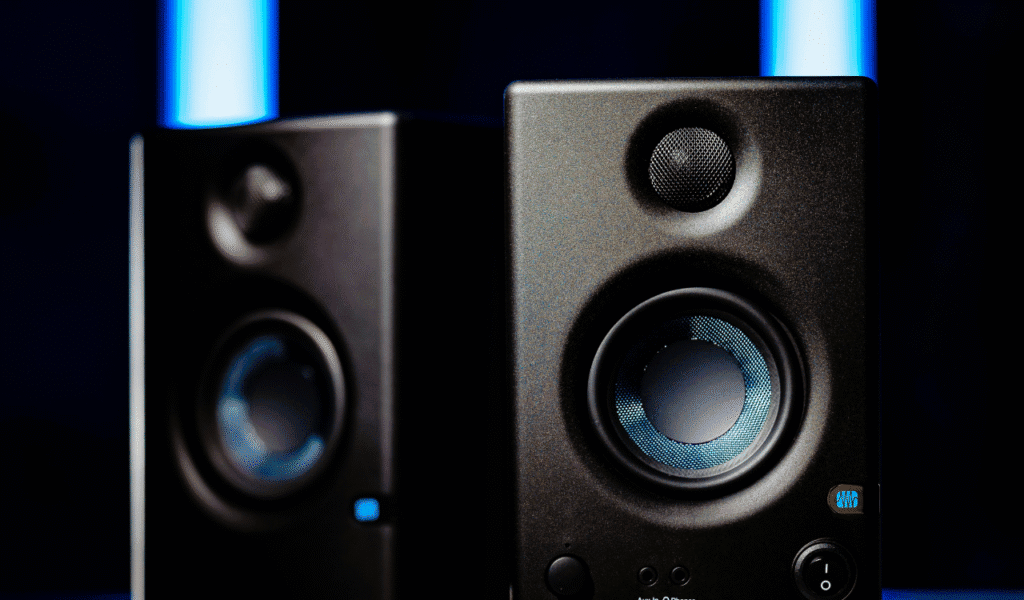
In a home setup, sound is frequently the most overlooked element, although making up half of the movie experience. The dynamic range required for cinema cannot be provided by the tiny, downward-firing speakers found in the majority of contemporary flat-screens, according to audio professionals.
A soundbar system with at least 3.1 channels, including a dedicated center channel for crystal-clear conversation, is advised by experts. Tech critics claim that putting your subwoofer close to a corner can really assist in reinforcing the bass, giving you the low-frequency vibrations that give action scenes a visceral quality.
Professional installers advise “decoupling” your speakers from hard surfaces to prevent a “flat” sound. By using special speaker supports or tiny rubber feet, you can stop vibrations from rattling your furniture, which might distort the sound.
Experts also suggest the “one-third” rule, which states that you should try to move your chairs away from the back wall to avoid sound waves bouncing off the wall and rapidly reaching your ears. Making this minor furniture placement change can result in a considerably broader soundstage, giving the impression that the music is flowing through the space rather than just hitting you.
3. Improve Room Acoustics with Soft Textures
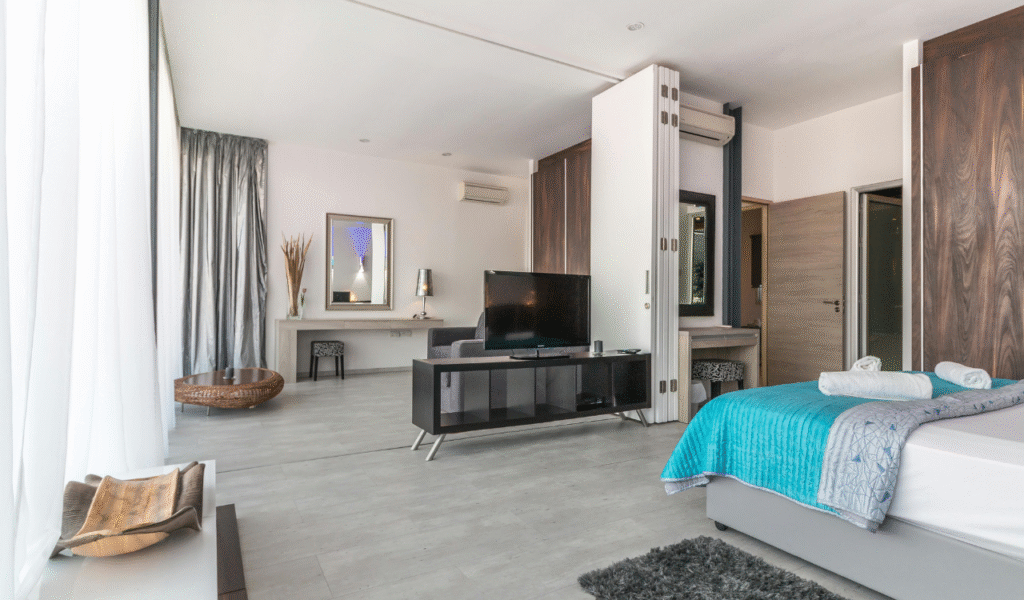
The sound of a private theater should be “dead,” with minimal reverberation or echo. The hard surfaces found in most living rooms, such as wide windows, glass coffee tables, and hardwood floors, make sound bounce wildly. The simplest method to “tune” your space, according to architects and acoustic experts, is to add soft, porous materials. One of the best ways to reduce undesired floor reflections and enhance sound quality is to place a thick, velvety area rug between the screen and your seats.
Interior organizers claim that decorative things can also be used to control acoustics. Big bookcases that are stocked with books serve as organic diffusers, dispersing sound waves to prevent echoes. Additionally, experts advise employing “acoustic art,” which is made of sound-absorbing foam and resembles a typical canvas print. The “warmth” of the soundtrack can be significantly increased by adding extra throw cushions or a heavy fabric sofa, according to designers, making the space feel calmer and more concentrated as soon as the movie begins.
4. Optimize Viewing Angles and Screen Height
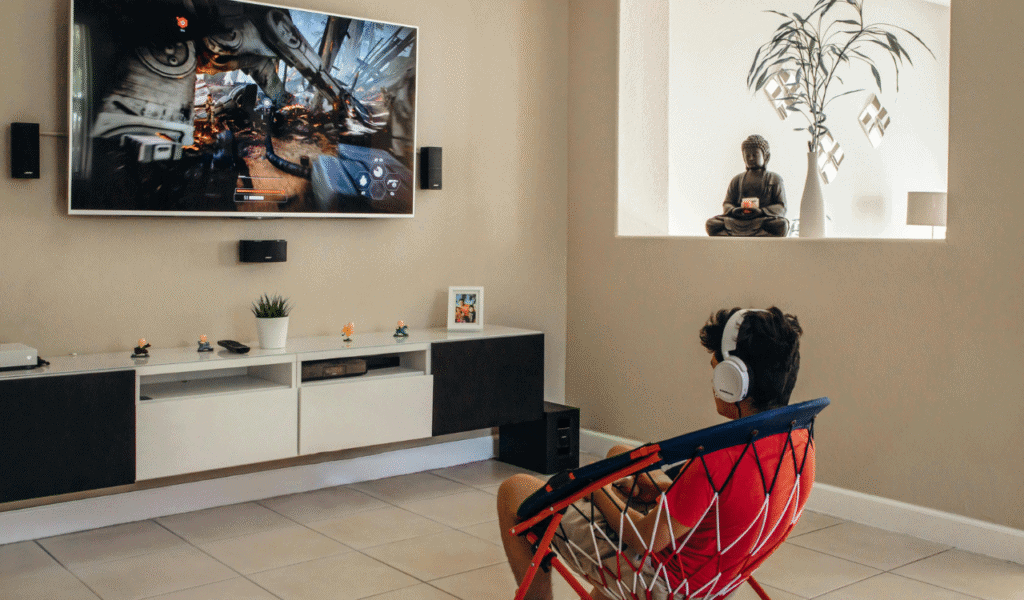
Mounting the television too high is one of the most frequent blunders made while setting up a living room; this is known as “the fireplace fail.” According to experts, when you sit in a theater, your eyes should be level with the bottom third of the screen for a comfortable viewing experience.
According to ergonomic experts, two hours of looking up causes severe neck strain and disrupts the movie’s immersion. To maintain the screen at the perfect “cinematic” height, professional flippers advise utilizing a low-profile media console instead of a high mantel.
Theater designers advise that the “viewing angle” should take up roughly 30 to 40 degrees of your field of vision. This usually entails sitting closer than you may imagine; experts say that the sweet spot for a 65-inch 4K screen is typically five to eight feet away. If the arrangement of your living room is set, you could want to think about utilizing a swivel wall mount, which enables you to move the screen forward and tilt it in the direction of your seats on movie evenings. During the day, this adaptability keeps the space flowing normally while guaranteeing a fantastic perspective for the movie.
5. Implement Smart Ambient Lighting for Eye Comfort
Even though you want the room to be completely dark for the movie, the stark contrast between the bright screen and the dark surroundings can actually strain your eyes. Using “bias lighting,” which is positioning a neutral, dim LED strip behind the rear of your TV, is advised by experts.
Lighting experts claim that this produces a gentle ring of light on the wall that lessens the strain on your students and makes watching lengthy films much more comfortable. Additionally, it enhances the richness and depth of the blacks on your screen.
Smart lighting is revolutionary for the rest of the space. Expert flippers frequently install low-profile floor lamps or dimmable “path lighting” that may be operated through an app. According to experts, the ability to gradually reduce the lights to 10% as the trailers begin gives the event a polished “wow” aspect.
Theater consultants state that the objective is to remove any light that reflects straight off the screen while maintaining a low-level ambient glow that will allow you to locate your remote control or popcorn without stumbling in the dark.
6. Upgrade Seating for Maximum Duration Comfort
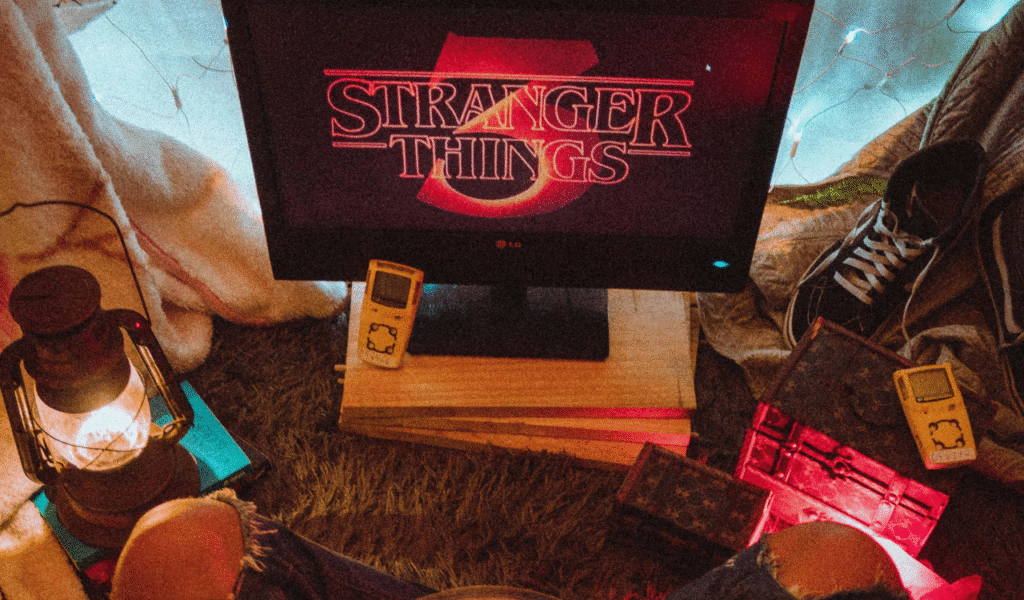
Sitting motionless for three hours is the only purpose for which a movie theater seat is made. Experts advise giving “supportive plushness” top priority if you want to reproduce this in your living area. Although a typical sofa can be used, designers advise including movable components such as reclining portions or large ottomans that provide complete leg extension. Professional organizers claim that the ideal theater seating arrangements give each visitor an unhindered “center-of-the-room” view, which may require moving your furniture into a little arc.
Additionally, interior designers advise investigating “modular” furniture, which can be rearranged to create a pit-style lounge for movie evenings and then put back into a formal arrangement afterwards. According to experts, the texture of the fabric is important; soft microfibers or velvet are better than leather since they reflect less light and sound. Some homes are even investing in “shakers” or “tactile transducers” that may be concealed inside the sofa cushions to vibrate in time with the movie’s bass, adding a tangible element to the cinematic experience in order to accurately replicate a private theater.
7. Streamline Your Tech and Remote Management
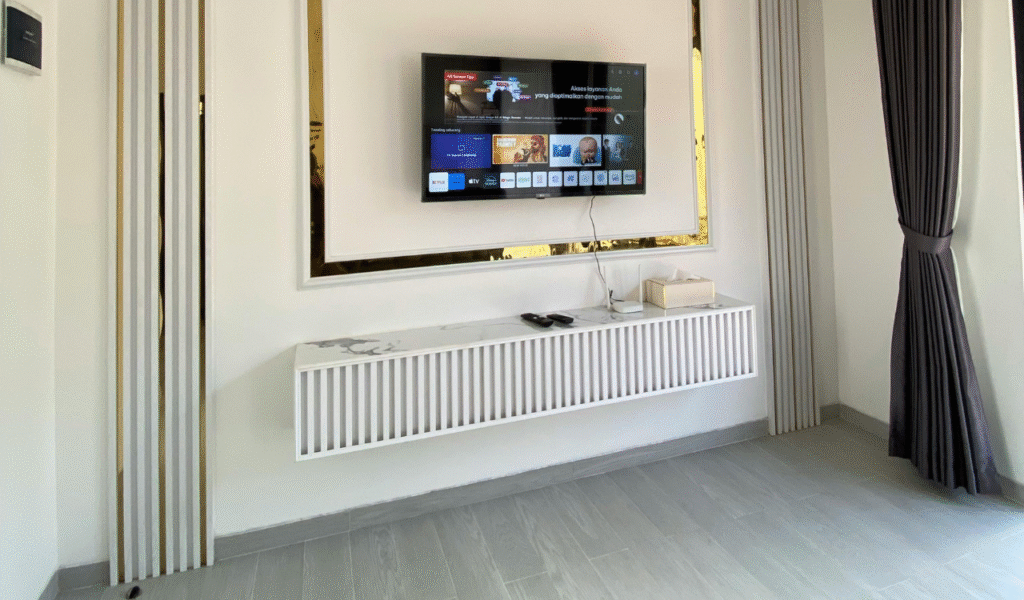
Fumbling with four different remote controls or noticing a tangled “rat’s nest” of wires behind the TV stand are two things that ruin the joy of a movie. Cable management, according to experts, is essential to a private theater’s polished appearance.
Professional organizers claim that the use of wire sleeves or in-wall wiring kits produces a neat, deliberate look that resembles a high-end installation. Expert flippers show that a tidy setup not only looks nicer but also avoids dust accumulation, which over time can cause equipment to overheat.
Tech advisors advise using a universal remote or a smart home hub that may initiate a “Movie Scene” with a single command to streamline the process. According to experts, a properly configured system can simultaneously switch on the projector, dim the lights, and turn on the soundbar. AV experts claim that by eliminating the “technical friction” associated with starting a movie, you may remain present. To keep the attention on the screen and away from the hardware, keep all of your gaming consoles and streaming gadgets concealed in a ventilated cabinet equipped with an infrared repeater.
8. Curate a Dedicated Refreshment Station

Having your drinks and nibbles close at hand is the perfect way to cap off a private theater experience. Expert event coordinators advise that having a special “concession” area, even if it is simply a chic bar cart, enhances the feeling of occasion.
According to experts, having a small, silent refrigerator or an insulated ice bucket in the room helps avoid having to make obtrusive trips to the kitchen at the movie’s finale. To keep trays and bowls from collecting screen glints, designers advise selecting matte-finish items.
A well-stocked snack station, according to the organizers, should provide a range of textures, from quiet foods that will not interfere with the sound to traditional popcorn. High-quality coasters and side tables are crucial for safeguarding your furnishings and maintaining a laid-back atmosphere, according to experts.
Professional flippers advise adding a “scent” element, such as a fancy popcorn maker or a subdued vanilla candle, to evoke the olfactory nostalgia of a vintage movie theater lobby for individuals who want to go above and above. These thoughtfully chosen elements are what elevate a straightforward TV night into an upscale private theater experience.