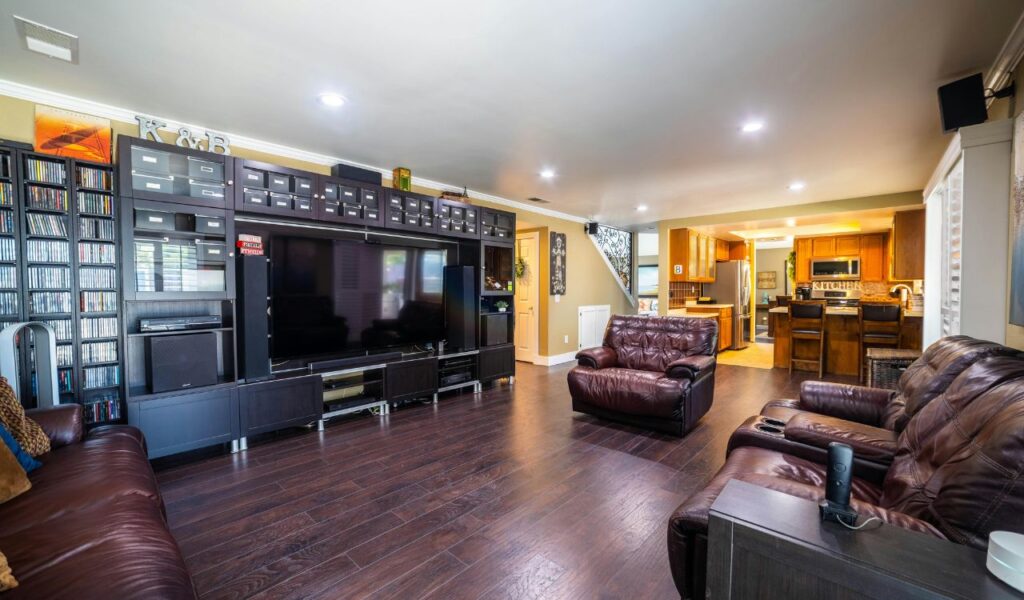
Turning a versatile living space into a cinematic retreat does not require a construction crew or five-figure budget. According to home theater design experts, the “cinema feel” is more about ambient management than gear expense. Professional AV advisors say tiny screen height, seating distance, and light control modifications can accomplish 80% of the work. Treat your living room as a customized experience rather than just a place to sit to obtain that “lost in the movie” feeling on a budget.
Immersion relies on visual optimization, aural management, and atmospheric lighting, according to industry experts. Instead of buying new tech, optimize what you have. Interior designers for media rooms say the goal is to remove screen glare, echo, and cable clutter, which shatters the cinematic spell. With some smart DIY renovations, your living room may rival the local multiplex in everything but price.
1. Master the “Eye-Level” Golden Rule
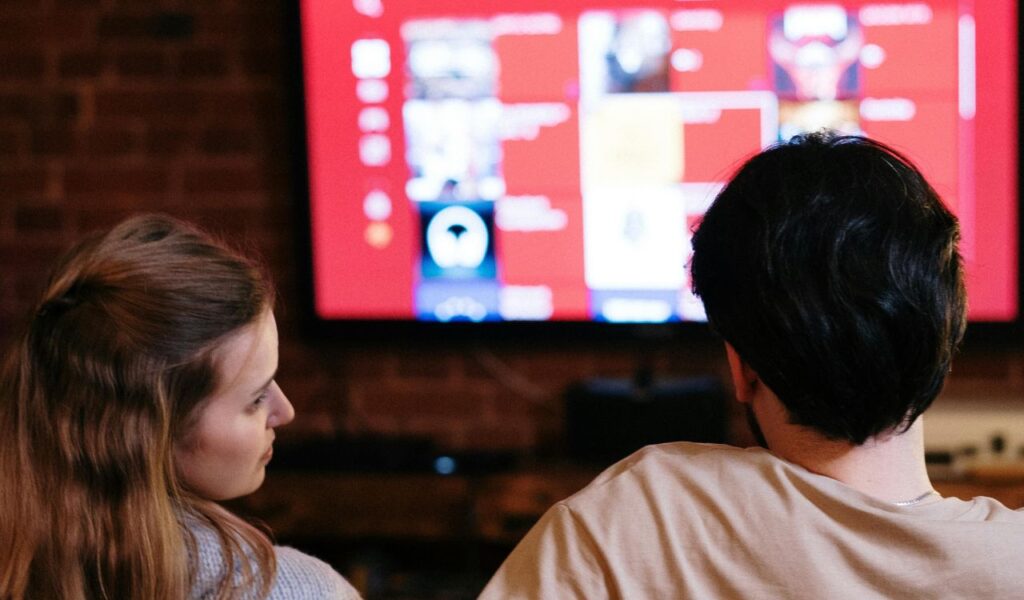
The most frequent error made by homeowners is to set their TV too high, frequently above a fireplace. This causes “front-row neck ache” and destroys the immersive experience, according to ergonomic experts and theater designers. According to experts, when seated, the center of your screen should be at eye level, which is around 42 inches off the ground. Professional installers advise using a tilting wall mount or a “down-and-out” bracket if your TV is already high up, so you may lower the screen while watching a movie.
Experts advise a viewing distance of roughly 1.2 to 1.5 times the diagonal length of your screen to determine the “IMAX sweet spot” for immersion. This entails sitting between 6.5 and 8 feet away from a 65-inch TV. This distance adequately fills your range of vision without straining your eyes, according to vision professionals. For free, you may significantly increase the “perceived” screen size by just moving your sofa one foot closer to the screen.
2. Implement “Soft” Acoustic Treatments
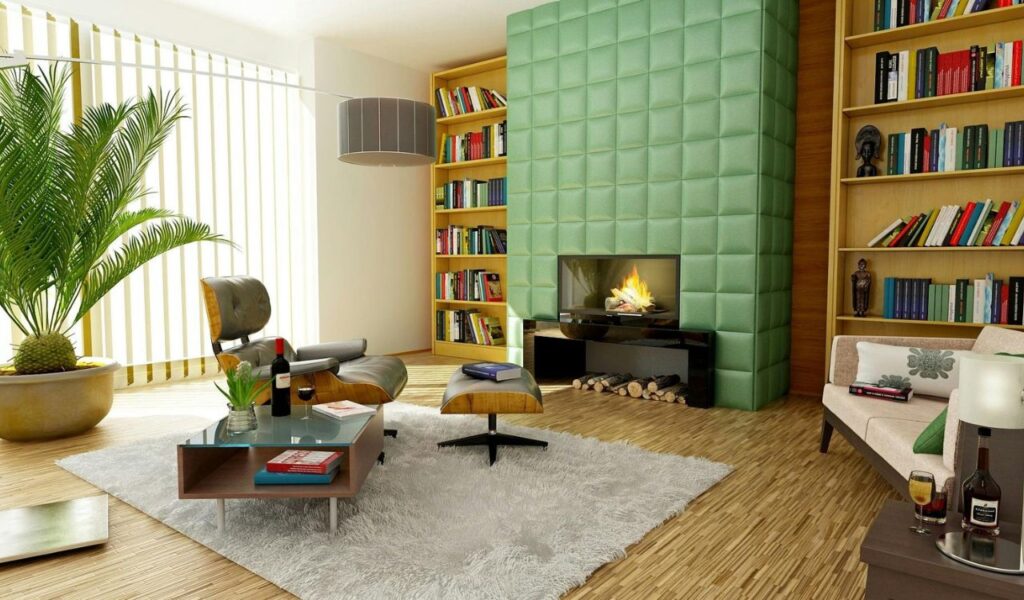
Hard surfaces like windows, hardwood floors, and bare walls are common in living rooms, which bounce sound and provide a muddy soundscape. According to acoustic consultants, this can be resolved without the need for costly foam panels. Think “soft” instead. Interior designers say that the easiest approach to absorb floor reflections is to place a large area rug between your couch and the screen. In a similar vein, covering windows with thick, floor-length drapes greatly reduces sound echoes while also blocking light.
When it comes to bare walls, hospitality experts advise utilizing “functional decor.” Natural sound diffusers include tapestries, large canvas paintings, and even well-stocked bookshelves. These things break up flat surfaces and avoid “standing waves” that make conversation difficult to hear, according to audio specialists. To avoid boomy, distorted low-end frequencies, experts also advise placing “bass traps” in the room’s corners, which can be as basic as a bean bag or a soft recliner.
3. Create Depth with Bias Lighting
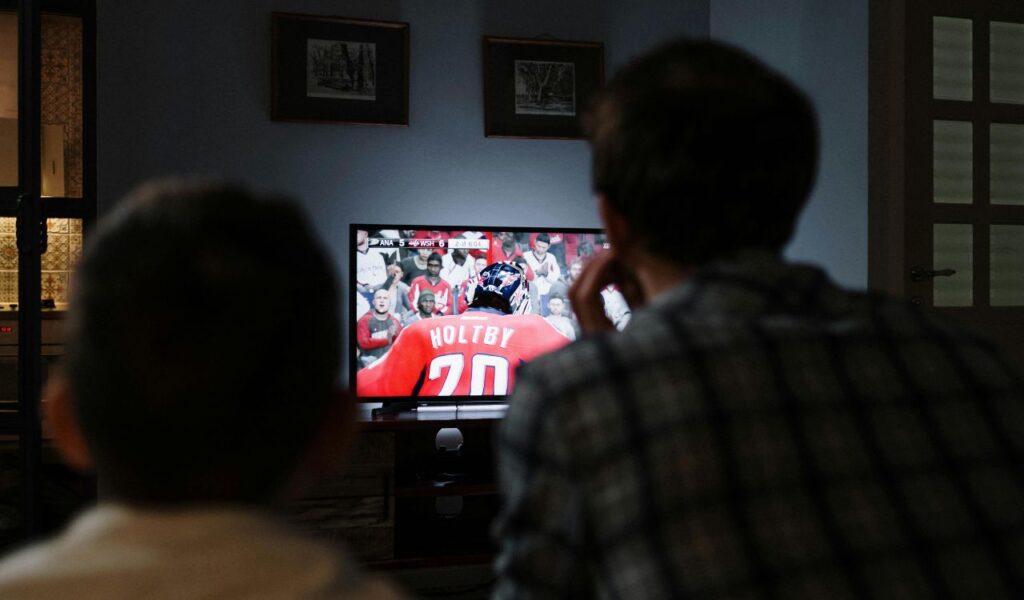
Cinema lighting is about controlled light, not complete darkness. Bias lighting, which involves putting an LED strip right behind your TV, is highly recommended by visual experts. Ophthalmologists claim that this lessens eye strain by giving the brain a neutral point of reference, which makes the colors and blacks on your screen appear more vivid and deep. It costs less than $20 to create this “halo” effect using a basic USB-powered LED strip.
Lighting experts advise using tiered lighting instead of above fixtures for the remainder of the space. Make use of floor lamps with smart bulbs that have warm tones and can be dimmed with a voice command or an app. In order to reduce disturbing reflections, experts advise against placing lights directly across from the screen. Using a “sunset” or “deep blue” color preset on your smart lights while watching a movie can improve the psychological experience of being in a posh commercial cinema, according to mood-setting experts.
4. Upgrade Audio with a 3.1 or Soundbar System
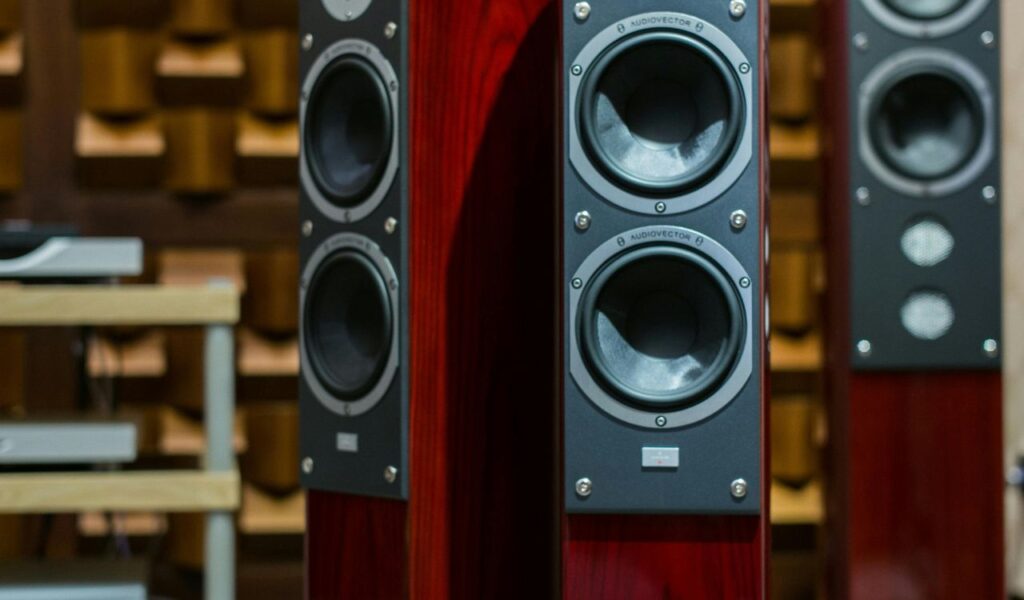
Half of the movie is lost on built-in TV speakers. For a low-budget living room, audio experts advise a 3.1 system (Left, Right, Center, and Subwoofer) as the “value king.” You never have to struggle to hear characters over explosions since the majority of movie dialogue is handled by the middle channel. According to AV experts, the simplest, clutter-free solution for tiny spaces is a top-notch soundbar with a wireless subwoofer.
To improve sound without purchasing new equipment, check the position of the speakers. Experts advocate setting your unit to “tweeters” at ear level and directed toward your primary seat. Even a low-cost soundbar sounds better when it is not obscured by décor or tucked away in a cupboard, according to room calibration specialists. If money is tight, you can get authentic surround sound for a fraction of the price using a “Home Theater in a Box” (HTIB) or a used receiver.
5. Control Light with DIY Blackout Solutions
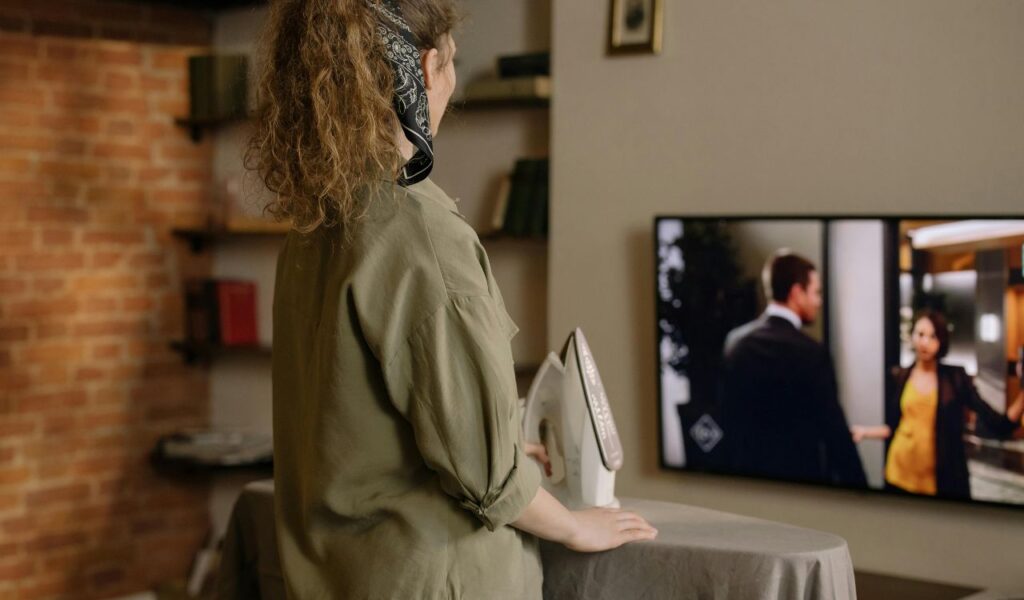
Contrast is harmed by ambient light. Moonlight or lighting might wipe off your screen even at night. Expert decorators suggest thermally lined blackout curtains. They not only produce complete darkness but also aid in soundproofing and temperature regulation. Experts advise utilizing “blackout film” or even a piece of black foam core that has been trimmed to suit the window frame and can be popped in and out on movie evenings for a genuinely low-cost solution.
The screen material is essential for people who have projectors. Because it stops light from escaping through the back, projection experts say that if you can not afford a professional screen, “blackout cloth” from a fabric store is a better do-it-yourself option than a regular bedsheet. Additionally, experts advise painting the wall behind the screen a dark, matte shade, such as navy or charcoal. In order to replicate the black “masking” seen in actual movie theaters, this lessens the light “bounce” and sharpens the screen’s edges.
6. Build a “VIP” Comfort Nest
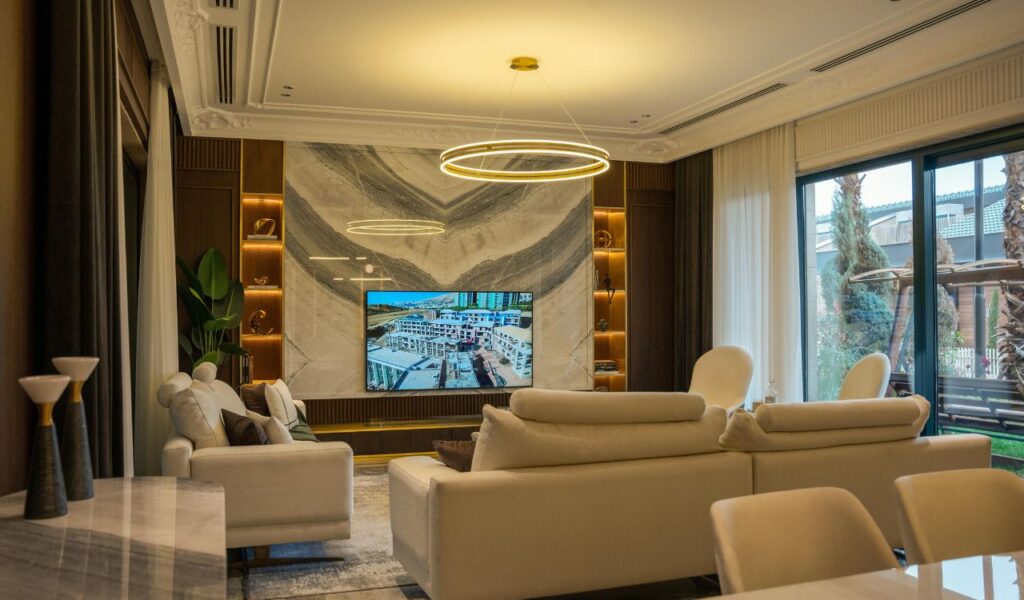
The seats are just as important to the upscale moviegoing experience as the screen. In order to simulate theater comfort without purchasing recliner chairs, experts in event planning recommend a “layered” strategy. To provide more seating alternatives, use giant throw pillows, floor cushions, and poufs. A “snack station” or a sofa console table below your couch, according to hospitality specialists, keeps snacks and drinks close at hand without running the danger of spilling on the upholstery.
Experts advise cable management to maintain the area’s purposeful appearance rather than a crowded appearance. The idea of a “private cinema” is broken by a tangle of cables behind the television. Home organizing experts say that for less than $15, a cord box or simple cable covers may conceal the mess. You may create a “cozy-VIP” ambiance that makes your living room feel like a destination by keeping everything neat and giving each guest a fluffy blanket.
7. Calibrate the “Digital Canvas” for Free
If the internal software settings are not optimal, even the priciest television can appear to be a cheap soap opera. Professional colorists and filmmakers claim that the “Store Mode” settings on the majority of TVs are too bright and blue-tinted. For a free solution, experts advise going into your image settings and turning off “Motion Smoothing” or “Frame Interpolation.” By doing this, the fake smoothness that turns great films into home videos is removed.
Calibration specialists advise changing your picture preset to “Filmmaker Mode” or “Movie/Cinema” in order to get a true “director’s intent” look. This lowers eye fatigue during lengthy marathons by adjusting the color temperature to a warmer, more natural tone. Experts also suggest reducing the “Sharpness” setting to almost zero because a higher level produces false halos around objects, while a lower setting maintains the natural, grainy feel of real film.
8. Engage the “Psychological Curtain” with Sensory Cues
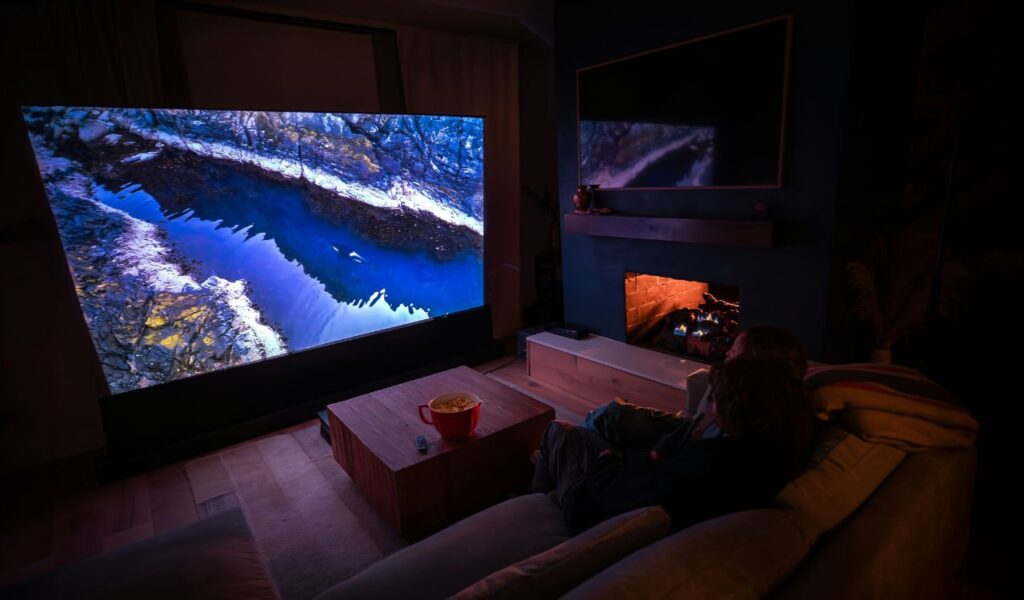
Private cinemas are a getaway, and environmental scientists think “sensory anchors” let your brain switch from duties to movies. Use a consistent “scent signature”,like a cedarwood candle or fresh stovetop popcorn, only during movie nights, say hospitality experts. This generates a Pavlovian reaction that tells your brain to relax and focus.
VIP experience concludes with tactile comfort. To replicate commercial theater deep-bass rumble without pricey “butt-kicker” vibrations, audio specialists recommend the “Subwoofer Crawl” to determine the ideal placement. Your subwoofer can be used as a side table or behind your sofa to hear low-end explosions or music at reduced volumes. These tiny behaviors, along with a “tech-free” rule, placing all phones in a stylish “charging station” out of reach, make your living room feel like a sanctuary.