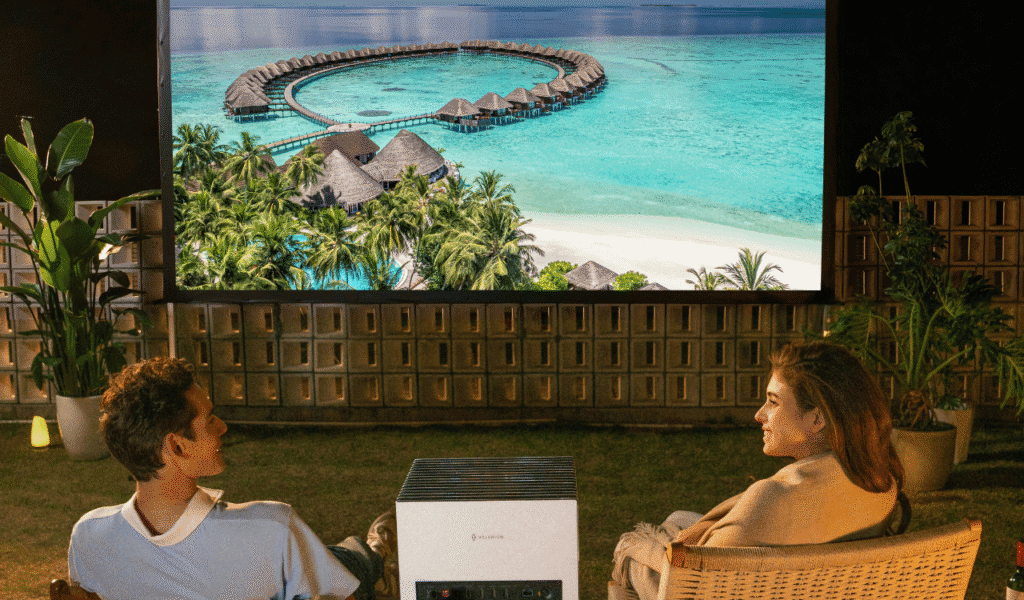
Movie night is meant to be the best way to escape; it’s an opportunity to forget about the world’s craziness and immerse oneself in a different reality. But by the second act, what begins as a nice plan frequently turns into a string of annoyances that leave everyone browsing through their phones. The atmosphere you create before the first frame ever reaches the screen is crucial to the success of any home gathering, according to hospitality experts. The “theatrical experience” you give your family members or guests is more important than the movie you choose.
The most frequent mistakes may be completely avoided with a little forethought, according to industry experts and home theater designers. We encourage distractions that disrupt the immersion when we approach movie night as a passive event instead of a planned experience. According to experts, the specifics of lighting, tempo, and manners make the difference between a forgetful Friday night and a cinematic institution. In order to ensure that your next feature presentation is nothing short of a huge success, this tutorial dissects the eight crucial mistakes that might ruin your screening.
1. Spending Two Hours Choosing a Film
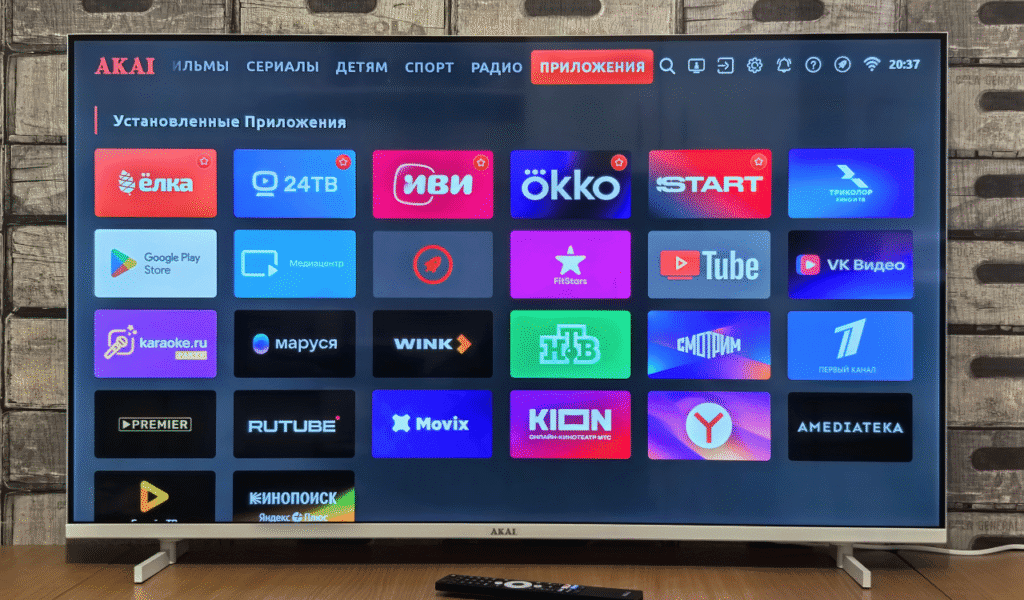
We’ve all experienced the dreaded “infinite scroll” moment when you spend more time on streaming services examining posters than actually viewing a film. The biggest depressant for any group activity, according to expert organizers, is decision fatigue. The vibe in the room drastically decreases when the host is ill-prepared because visitors become disinterested and begin to look at their watches. According to experts, a lack of focus results in a “lowest common denominator” selection that no one genuinely wants to see, making for a dull and uninteresting evening.
Experienced event coordinators advise creating a “shortlist” of three different possibilities before anyone even shows up at your house to avoid this. As a result, the group feels empowered without being overburdened by a thousand titles. Film critics say that focusing on a topic, such “80s Horror” or “Award Winning Docs,” might also assist to quickly restrict the field. You may make sure the movie starts while the popcorn is still hot and the enthusiasm is strong by making the executive decision to restrict the options.
2. Neglecting the Sound Calibration
One of the most common complaints from home viewers is that the explosions are so loud that the conversation is barely audible. The majority of individuals, according to audiovisual contractors, never adjust their audio settings, so their pricey systems are more suited for newscasts than epic movies. Poor sound balance, according to experts, pulls viewers out of the narrative by requiring them to continuously adjust the level. You’ve already lost the fight for your guests’ full attention if they are always asking, “What did he say?”
To make sure the center channel is clear, home theater experts advise performing a “sound check” 10 minutes prior to the start time. Technicians claim that the startling contrast between speech and action can be resolved by simply moving your speakers away from the wall or changing the “night mode” settings. Great sound doesn’t require a thousand-dollar setup; all you need to do is make sure the balance remains constant. A properly tuned room creates the immersive environment that filmmakers originally envisioned for their audiences by allowing the dialogue to reverberate and the score to swell.
3. Serving “Loud” or Messy Foods
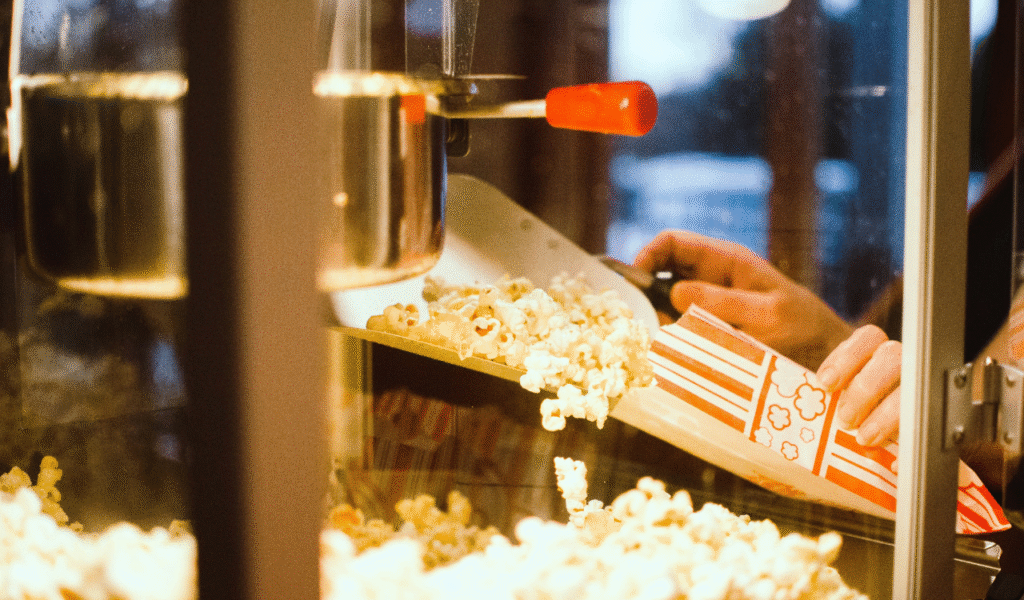
Snacks are necessary for a movie night, but the wrong selection may make the entire gathering sound like a nightmare. Expert cooks disclose that excessively crunchy appetizers, such as thick-cut kettle chips, produce a continuous background noise that interferes with the sound of the movie. Foods that need to be eaten with a knife and fork or that leave a sticky mess on the furniture can divert attention away from the screen. The finest movie food, according to experts, is “blind-friendly,” which means you can consume it without taking your eyes off the action.
Stick to traditional popcorn, soft candies, or bite-sized sliders that don’t break into a thousand pieces, according to organizers. Interior designers advise taking into account the “spill factor” of your beverages as well; heavy-bottomed mugs or stemless glassware are far safer than delicate wine glasses in a dimly lit space. You may concentrate the attention on the cinematography instead of the clatter of plates by making the menu minimal and silent. During the climax, keep in mind that the objective is to serve your visitors without transforming the living room into a chaotic, boisterous cafeteria.
4. Leaving the Lights on Full Blast
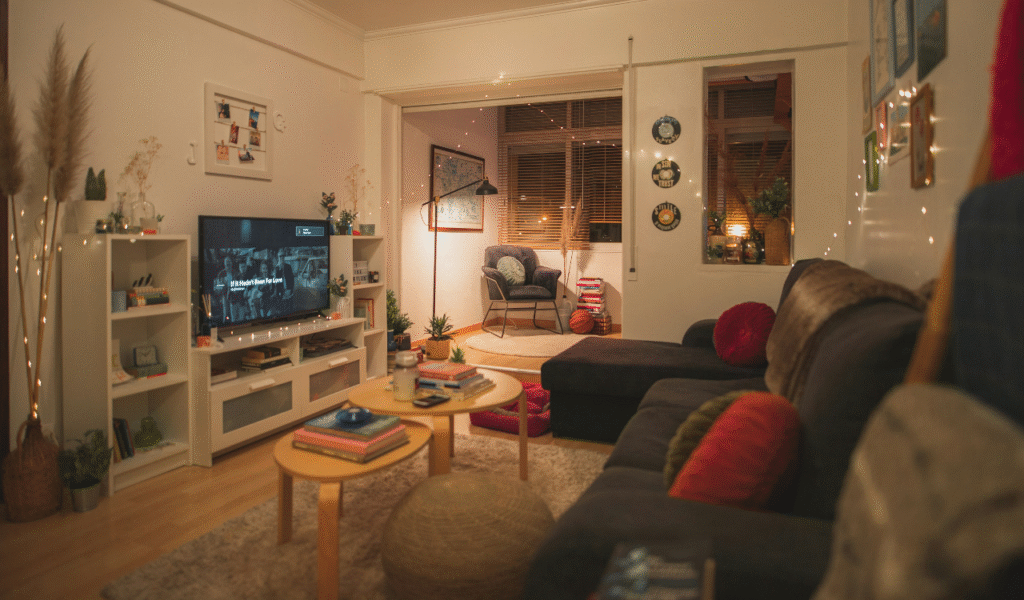
A bright overhead light reflecting off the TV or projector screen is the worst thing that can mar the “big screen” experience. Complete darkness isn’t always the solution either, since lighting designers find that the stark contrast can cause severe eye strain over a two-hour period. According to experts, the expert key to a good viewing experience is “bias lighting,” which involves creating a gentle glow behind the screen. In addition to improving the image’s apparent contrast, it transforms the space from a basement in the suburbs into an upscale movie theater.
Interior decorators advise removing any light sources that directly shine on the screen, particularly lights or windows. Experts advise using smart bulbs or even a few well placed candles to create a cozy, welcoming atmosphere if you don’t have sophisticated dimmers. Everyone’s brains receive this subliminal cue that it’s time to relax and concentrate. The difference between a formal cinema event and a casual TV session can be bridged by a well-lit space, which gives the evening a unique vibe and is designed to maximize audience comfort.
5. Failing to Enforce a Phone Policy
The illumination of a smartphone screen is the ultimate intrusion during a moving movie scene in our hyperconnected society. According to professional etiquette instructors, “second screening” has spread like wildfire and ruined the experience of watching a movie with others. When one person begins scrolling, it frequently sets off a domino effect, encouraging everyone else to check their alerts. According to experts, this conduct inhibits the intense emotional involvement necessary to fully enjoy a skillfully written narrative or a nuanced character development.
Though a gentler approach is frequently more effective for informal nights, some hosts have started putting a “phone basket” at the door to fight this. Simply saying “we’re going phone-free for the feature” establishes a clear expectation for the group, according to social scientists. The first border is important, but if the film is interesting enough, viewers won’t feel the need to turn away. Removing the digital link enables everyone to be in the present, creating a sense of community that only a great movie can offer.
6. Interrupting with Constant Commentary

A shared chuckle and an incessant barrage of inquiries that drown out the conversation are two very different things. Communication experts claim that the “talkative viewer” is frequently the most frequently mentioned cause of a bad movie night experience. Asking “who is that?” or “what’s going to happen next?” every five minutes is a serious etiquette violation, even though a few jokes are part of the enjoyment. According to experts, these disruptions disrupt the story’s flow and prevent other viewers from becoming fully engaged.
Experts in the field advise that if you are viewing a complicated mystery or thriller, you should save the in-depth analysis for the post-film conversation. Professional mediators claim that if you have already seen the film, it is your responsibility to be quiet and avoid giving away any of the plot points to others who are watching it for the first time. Promoting a “half-time” break for refills and restroom runs is a terrific strategy to let everyone decompress. This guarantees that the actual viewing time will always be a peaceful, hallowed place where the narrative may be told in its own words.
7. Disregarding the “Optimal” Seating Plan

No matter how wonderful the plot is, your visitors won’t enjoy the film if they are craning their necks or sitting at an odd angle. The “sweet spot” for viewing, according to home theater designers, is usually at eye level and twice the width of your screen away. According to experts, a lot of people position their TVs too high, frequently above fireplaces, which leads to discomfort after 30 minutes. Physical therapists say that “theater neck” is a real problem that can make a great night into a week of tension and stiffness.
To make sure every chair has a clear, unhindered line of sight, organizers advise making a circle of the space before visitors arrive. Professional flippers advise utilizing bean bags or floor cushions to generate a “front row” that doesn’t obstruct the couch’s occupants if you have a huge gathering. Another suggestion from experts that raises the general degree of comfort is to provide pillows and blankets for each seat. A well-planned seating arrangement lets your guests unwind and appreciate the performance by demonstrating that their physical comfort was a top concern.
8. Starting the Movie Too Late
When it comes to a great movie night, timing is crucial, particularly for individuals with early schedules or on a work night. According to seasoned event coordinators, the quickest way to guarantee that half of your audience will nod off before the third act is to start your event late. It’s common for a “7 PM movie night” to actually begin at 9 PM when you factor in food, conversation, and movie selection. According to experts, this causes undue pressure on visitors to remain awake, which results in a viewing environment that is both preoccupied and exhausted.
When deciding when to start the “intro” phase, time management experts advise working backward from your intended end time. The best practice for adult parties is to start the movie no later than 8 PM if it is longer than two hours. Before the first visitor knocks on the door, industry insiders advise setting up the snacks and cueing the movie to the title screen. Respecting everyone’s time guarantees that the mood stays upbeat during the credits, providing ample opportunity for a brief, animated conversation before everyone leaves for their homes.